


1、 DC resistance test
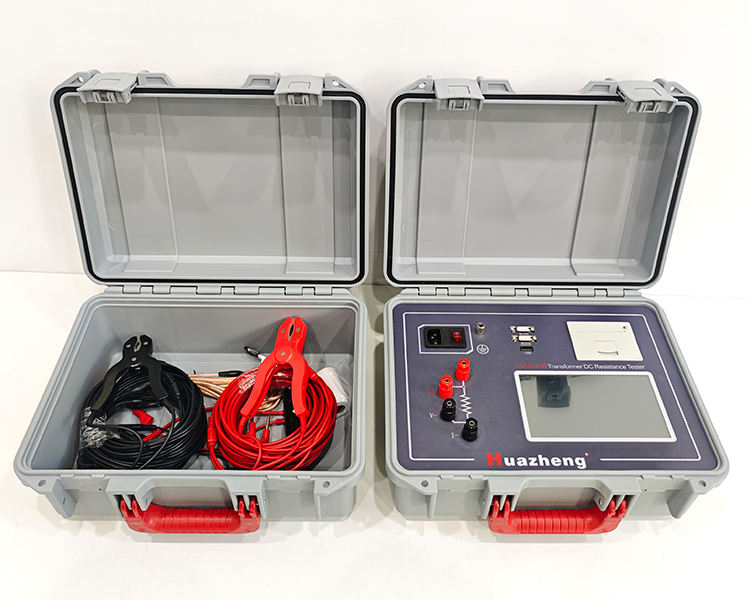
Use a three-phase DC resistance tester to measure the DC resistance of each phase winding and compare the three-phase imbalance. If the resistance deviation is too large, the value suddenly changes, or the three-phase difference exceeds the standard, it can be judged that there are defects such as inter turn short circuit, loose joint, poor welding, wire breakage, internal disconnection, etc. in the winding.
2、 Transformation ratio and wiring group test
Use a ratio tester to detect the ratio error and wiring group of each tap gear. Excessive variation ratio and polarity errors often indicate short circuits between turns, incorrect number of turns, winding deformation, and internal wire breakage in the winding. At the same time, poor contact issues with the tap changer can be investigated.
3、 Insulation resistance and absorption ratio test
Measure the insulation resistance of the winding to ground and between phases using a megohmmeter, and calculate the absorption ratio and polarization index. The significant decrease in insulation resistance and lower absorption ratio indicate that the winding is damp, the insulation is aging, and the pollution is severe; If the value suddenly drops, it is often accompanied by insulation defects between turns or layers.
4、 Winding deformation test (frequency response method FRA+low voltage impedance)
Detect the frequency response curve of the winding through frequency response method and compare it with the three-phase curve or historical curve. The obvious deviation and distortion of the curve indicate that the winding is deformed, displaced, twisted, bulged, and damaged after short-circuit impact. Combined with short-circuit impedance testing, the overall deformation degree of the winding can be determined.
5、 Partial discharge detection
Use a partial discharge meter for offline or online partial discharge testing to monitor the discharge amount and discharge pattern. Excessive partial discharge and continuous pulse discharge are often caused by early insulation defects such as weak insulation between winding turns, sharp discharge, insulation cracking, and internal air gap discharge.
6、 Chromatographic analysis of dissolved gases in oil
Perform gas chromatography analysis on transformer oil to monitor the content of acetylene, hydrogen, total hydrocarbons, etc. Acetylene and hydrogen have significantly increased, typically reflecting internal faults such as arc discharge, turn to turn short circuit, local overheating, wire breakage and arc pulling in the winding.
7、 No load and load loss test
Measure no-load loss, load loss, and impedance voltage. Abnormal increase in no-load loss often corresponds to inter turn short circuit and iron core failure; Sudden changes in load loss and abnormal impedance voltage often indicate winding deformation, short circuit, broken wire, or poor connection.