



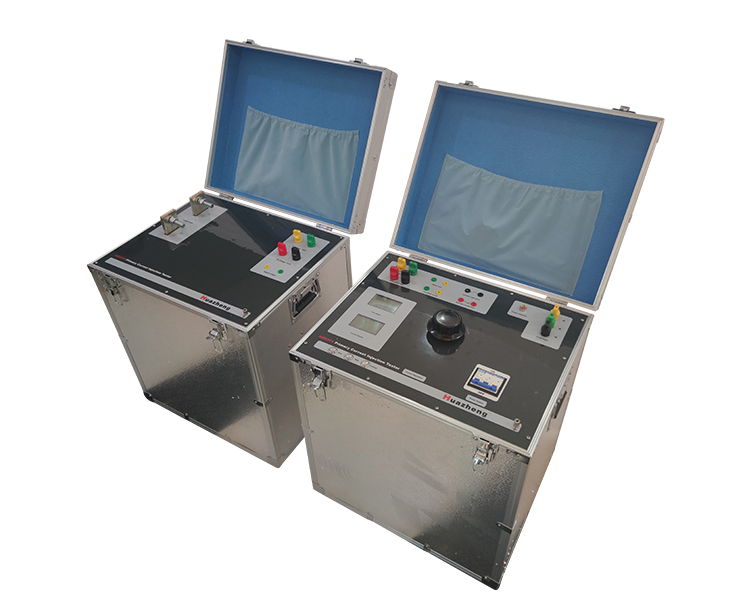
A considerable number of safety accidents at electrical testing sites occur during high-current tests. These accidents are not due to issues with the equipment itself, but rather to the operators' lack of sufficient respect for "high current". The following precautions are compiled, and each one is backed by real accident lessons.
1. Grounding must be the first step
Whether it's setting up the test circuit or connecting the test object, the grounding wire must be the first to be connected and the last to be removed throughout the entire process. Grounding the current booster housing can prevent electric shock to operators in case of equipment leakage, while grounding the test object prevents injury from induced voltage. Many engineers skip this step due to its inconvenience, but this is truly gambling with one's life.
2. It is prohibited to plug in or unplug the wiring during power-on
When the current booster is outputting high current, any disconnection at any contact point in the circuit will generate an electric arc. This electric arc is not an ordinary spark, but a high-temperature plasma that can burn the skin and damage the wiring terminals. During power-on, any wiring operation is strictly prohibited. It is necessary to first stop the output, return the current to zero, and then perform wiring.
3. The power supply connected must be capable of withstanding a 30A surge
Many small testing laboratories often overlook this point: the instantaneous start-up of the current booster generates a large impact current on the power supply circuit, necessitating a margin in the capacity of the power switch and wiring. If the on-site power supply line is too thin, it may cause a trip at the very least, or even result in the line heating up and catching fire at worst.
4. The setting value for overcurrent protection cannot exceed the rated value
The overcurrent protection action value can be set on the panel, but this value cannot exceed the rated output current of the current booster. Some people, for the sake of convenience in testing, adjust the protection value to a very high level, resulting in the equipment overheating and the protection mechanism failing to act in time, directly burning the transformer windings.
5. If there is no display when the computer is turned on, do not repeatedly restart it
If there is no display on the rear panel after powering on, first check if the power input is normal and confirm if the three-phase four-wire connection is properly made. Do not repeatedly press the start button, and do not disassemble the device randomly by guessing where the problem lies. First, power off and check the wiring. If you cannot make a judgment, contact the manufacturer's after-sales service.
6. Special reminder for humid environment
For upflow devices stored in humid climates for extended periods, it is recommended to power them on for approximately two hours each month to allow internal moisture to dissipate and protect electronic components. When powering them on for the first time after prolonged disuse, do not connect the test sample initially. Allow the device to run without a load for a few minutes before connecting the load.