



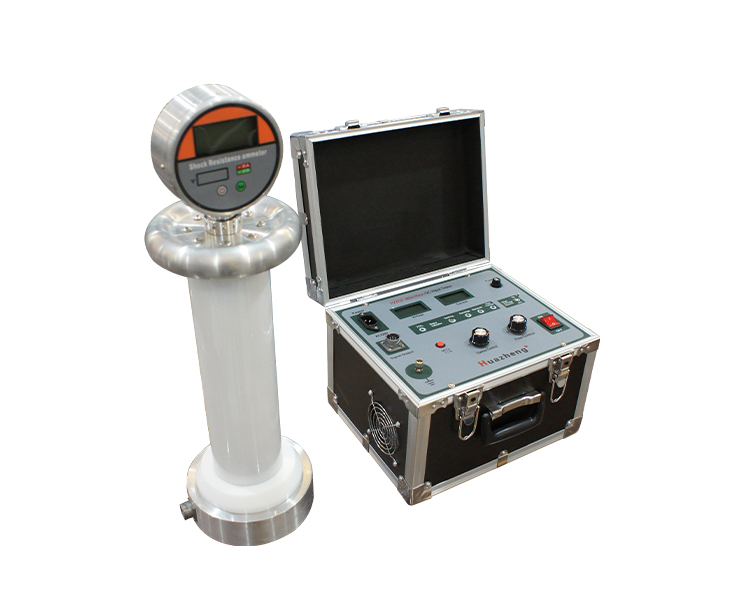
DC high voltage ranging from tens to hundreds of kilovolts is not a joke. Compared with AC high voltage, DC high voltage also has a particularly dangerous aspect: the charge of the capacitive test sample will not dissipate automatically after power failure. If the high voltage is maintained for a long time and the wire is not fully discharged, it is equivalent to dismantling a delay bomb. The following regulations all have painful lessons.
1. Grounding is a prerequisite for all operations
The grounding terminal of the control box, the grounding screw at the bottom of the high-voltage unit, and the shell or shielding layer of the tested object must all be reliably grounded to the same grounding electrode, and the grounding wire is not allowed to be connected in series. If any section of the grounding wire is disconnected, the entire grounding system becomes virtually useless. Repeatedly checking the grounding before the experiment is not unnecessary.
2. The knob must be in the zero position before boosting
Before closing the high voltage switch, the coarse adjustment knob must first return counterclockwise to the bottom zero position. If the knob is not in the zero position and the high voltage switch is closed, the voltage will suddenly change from a non-zero state and be applied to the test sample. The surge current will immediately trigger overcurrent protection, which can seriously damage the insulation of the test sample. HZZGF is equipped with non-zero starting protection and can detect the position of the knob, but operators cannot rely on protection instead of regulations.
3. The shutdown sequence must not be reversed
Correct shutdown: Turn the knob back to zero → Turn off the high voltage switch → Turn off the main power supply. It is strictly prohibited to directly cut off the high-voltage output with the main power switch - doing so will generate operating overvoltage, damage internal components of the equipment, and prevent the test object from discharging, posing a risk to personnel safety due to residual high voltage.
4. The discharge of capacitive test samples must be sufficient
After the experiment, a large amount of charge will be stored on capacitive devices such as cables and capacitors, and even if the voltmeter shows zero, the residual charge may still reach a dangerous level. Discharge steps: First, use a discharge rod to slowly approach the conductor from the far end. After the arc light is discharged, wait for the arc light to disappear, then contact the conductor for complete discharge, and finally hang the grounding wire. Do not touch with your hands throughout the entire process. The discharge rod is only suitable for applications below 60kV.
5. Disposal of High Voltage Cables
The high-voltage output cable should be placed flat on the ground before and after connection, aligned with the positioning pin, and pressed clockwise to tighten. It is not allowed to shake left and right or forcefully pull the cable by hand, as this will damage the internal contacts of the aviation plug. Cables must not be touched during testing to prevent electric shock. When the voltage exceeds 60kV, the high-voltage cable must maintain a safe distance of at least 50cm from the ground and surrounding objects.
6. Intermittent work system cannot be violated
HZZGF is designed for intermittent operation, with a continuous working time of no more than 30 minutes under rated load. After completing a set of experiments, the machine must be shut down for heat dissipation and cannot operate continuously at full load, otherwise the internal components will overheat and be damaged.