



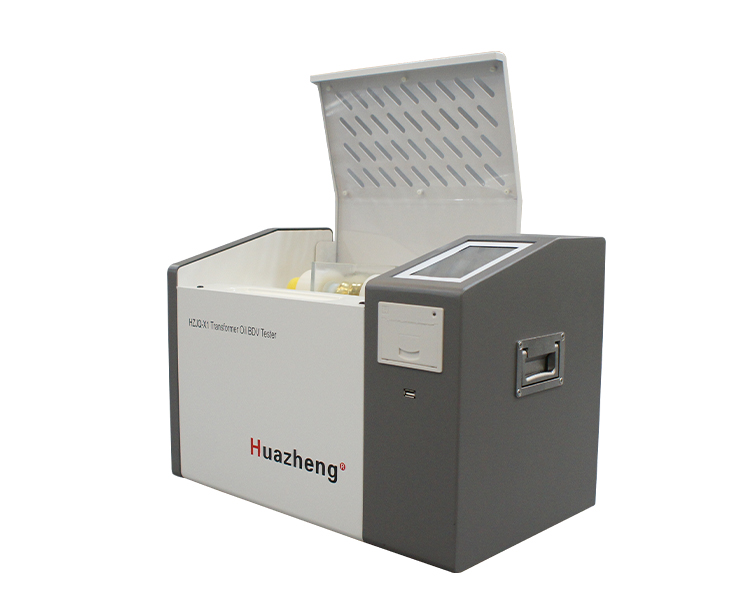
Many engineers think that oil cup cleaning is an inconspicuous operation, just rinse it casually. However, the breakdown voltage test of insulating oil is an extremely sensitive detection item. Even a small fiber or carbon particle in the 2.5mm gap between electrodes may significantly reduce the breakdown voltage, leading to the erroneous conclusion of "unqualified oil".
Oil cup cleaning: only petroleum ether can be used
The instruction manual clearly states that petroleum ether should be used for cleaning, and the use of other organic solvents is prohibited. Although solvents such as acetone and alcohol have strong solubility, they can leave residues on the electrode or glass surface, affecting the insulation performance. Petroleum ether does not leave any residue after volatilization and is a standard cleaning agent in the insulation oil testing industry.
Cleaning steps
The first step is to wipe the electrode surface and electrode rod with a clean silk cloth - note that it is silk cloth, not cotton cloth. Cotton cloth fibers are prone to falling off, which is precisely one of the sources of pollution that leads to low test results.
Step 2, clean three times with petroleum ether: inject 1/4 to 1/3 of the capacity of the oil cup with petroleum ether each time, cover the glass and shake it evenly for one minute (with force, not gently), pour it out and dry it with a hair dryer for 2-3 minutes, and then proceed to the next time. If three times is not enough, you can wash it again.
Step three, clean the oil sample to be tested 1-3 times using the same method. The purpose of this step is to replace the trace petroleum ether remaining in the oil cup with an oil sample to ensure the purity of the test oil sample.
Cleaning of agitator blades
When there are tiny particles on the surface of the stirring blade, it can also contaminate the oil sample. Cleaning method: Wipe the surface of the mixing blade with a clean silk cloth, hold it with tweezers throughout the process, and never touch the surface of the mixing blade with your hands - oil and moisture on your hands are the most common sources of contamination. Then use tweezers to hold and immerse in petroleum ether for repeated washing. After drying, immerse in the oil sample to be tested for washing again before use.
Storage during the suspension period
After the experiment is completed, fill the oil cup with high-quality insulating oil and keep the electrode immersed in the oil for storage - do not expose the electrode to air, otherwise the electrode surface will oxidize and need to be cleaned again before use. Alternatively, clean and dry with petroleum ether according to the cleaning process, and store in a vacuum dryer.
Both methods are acceptable, choose the one that suits your laboratory conditions.