



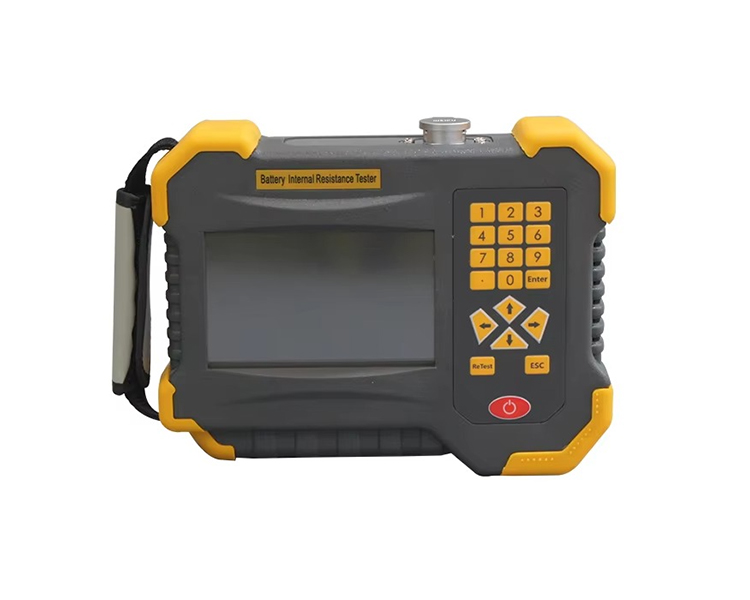
HZNZ-100 provides two testing methods: manual and automatic. On the surface, the only difference is whether to click the button or not, but in reality, it has an impact on testing efficiency and data reliability. Different situations have different optimal choices.
Manual mode: After each clip change, click on "Start Test"
Replace the test clip → manually click "Start Test" → the instrument completes the measurement → displays the results → switch to the next section → click start again.
Applicable occasions:
On site with small battery spacing and concentrated attention required for clip changing operations
In situations where on-site verification and confirmation of the accuracy of each test result are required before continuing
Novice operation, slow pace, requires time to verify
Advantages: Fully controlled by the operator, it will not be mistakenly triggered due to occasional situations such as clamp shaking or accidental short circuiting.
Disadvantages: Relatively low efficiency, testing 100 batteries requires more operational steps.
Automatic mode: Automatically recognize and start within 1-2 seconds after changing the clip
Replace the test clip → The instrument automatically recognizes the new battery → It will start automatically after 1-2 seconds → After completion, wait for the clip to be replaced → It will continue automatically.
Applicable occasions:
A standard cabinet with spacious battery pack spacing and quick clip changing operation
Batch testing and daily inspections that pursue efficiency
Experienced operators ensure that the clip changing action is standardized and not easily touched by mistake
Advantages: Save time on each "click to start" session, 100 batteries can be much faster; The operation is smoother, and attention can be focused on the quality of the clip replacement.
Precautions for automatic mode
The 1-2 second delay in automatic mode is designed to allow the test clip to make stable contact with the new battery before sampling, avoiding reading fluctuations caused by unstable contact when the clip is first clamped. Do not immediately move the test line after changing the clamp, stabilize for 1-2 seconds to allow the instrument to complete identification and measurement.
If the clamping speed is fast but the contact is unstable, the automatic mode may trigger the measurement before the clamp is fully compacted, resulting in a certain section of data being too high. In this situation, the "retest" function can be used to retest suspicious data separately.
Retest functionality
Whether in manual or automatic mode, during the testing process or data viewing, any single battery can be triggered for retesting, covering only that section of data without affecting the recording of other sections.